Big Bear Lake has two personalities, and fall and winter show off both of them. In autumn, the crowds thin out, the air turns crisp, and the aspen groves flash gold against the pines. Then winter arrives and the whole mountain transforms — lifts start spinning, fireplaces get lit, and the town settles into that cozy, snow-globe rhythm that keeps people coming back year after year.
Here's everything worth knowing about Big Bear Lake in the colder months — the things to do, the neighborhoods to know, how to drive up safely, and where to stay.
Why Fall and Winter Are Big Bear's Best Seasons
Summer in Big Bear is lovely, but fall and winter are when the mountain earns its reputation. Fall brings mild days, empty trails, and some of the best stargazing of the year — plus lower lodging rates before the snow flies. Winter is peak season for a reason: skiing, snowboarding, sledding, and that particular magic of watching snow fall from inside a warm cabin.
Hit the Slopes at Bear Mountain Resort
Bear Mountain is one of Southern California's go-to mountains for skiing and snowboarding, famous for its terrain parks — with plenty of terrain for beginners and casual riders too.
That's not an exaggeration if you stay with us: Big Bear Reset sits just 0.8 miles from Bear Mountain Resort. Sleep in, make coffee, and still beat the crowds to first chair — then come home to the private hot tub.
Meet the Locals at the Big Bear Zoo
Just 0.6 miles from the cabin, the Big Bear Alpine Zoo is one of the mountain's most underrated stops. It's a rehabilitation facility for injured, orphaned, and human-raised wild animals that can't survive in the wild — bears, mountain lions, wolves, eagles, and more. It's a small, walkable zoo that's perfect for a half-day, and kids tend to love it.
In winter, keep an eye on the sky around the lake itself: Big Bear Lake is a known wintering spot for bald eagles, and spotting one circling over the water is a genuine thrill.
Ride the Alpine Slide at Magic Mountain
A Big Bear classic. The bobsled-style Alpine Slide at Magic Mountain has been sending riders down a quarter-mile track for decades — old-school family fun and an easy add to any itinerary.
Stroll The Village
Downtown Big Bear Lake's Village district is the mountain's social center: blocks of shops, restaurants, bars, and candy stores done up in alpine-lodge style. In fall it's relaxed and browsable; in winter it's strung with lights and buzzing with après-ski energy. Grab dinner, wander the shops, and pick up anything you forgot to pack — this is also where you'll find gear rentals if you need them.
The Lake in the Off-Season
Big Bear Lake doesn't close for winter — it just changes character. Early fall is still beautiful on the water: kayaking, paddleboarding, and lakeside walks with the autumn color. By winter, the lake turns glassy and quiet, ringed by snow-dusted peaks.
Moonridge: Big Bear's Quiet Side
Here's some local knowledge: not all Big Bear neighborhoods are created equal. Moonridge, on the south side of the lake, is where the locals actually live — quiet pine-tree streets, larger lots, and a residential feel that's a world away from the Village bustle. It's home to the Zoo and close to Bear Mountain.
Big Bear Reset is a Moonridge cabin. You get the best of both worlds: a peaceful street where you can actually hear the wind in the pines, with the slopes, the Zoo, and the Village all a few minutes away.
Where to Eat
You won't go hungry in Big Bear. The Village is packed with restaurants and bars covering the full mountain-town spectrum: hearty breakfasts before a ski day, pizza and burgers for the family, and cozy dinner spots with fireplaces for date night.
That said, one of the great pleasures of a cabin stay is cooking together. Big Bear Reset's full gourmet kitchen — gas range, dishwasher, waffle iron, Instant Pot, and a serious coffee and tea bar — is built for group meals. Stock up on the way up and make the cabin your base camp.
Winter Driving: Come Prepared
The roads to Big Bear (Highways 18 and 38) are plowed regularly, but conditions change fast. California chain controls are real and enforced: when they're in effect, you need chains or cables in your vehicle even with all-wheel drive, and you may be required to put them on. Buy a set before you come — mountain-town prices are steep and they sell out during storms.
A 4x4 or AWD vehicle is strongly recommended in winter. Check Caltrans road conditions before you leave, fill up your tank, and give yourself extra time. Big Bear Reset's road is plowed like the rest, but after a big dump, take it slow on the final residential streets.
What to Pack
- Layers, not bulk. Mountain weather swings 30 degrees in a day. Base layer, mid layer, shell.
- Waterproof boots with real tread. Fashion sneakers on ice are a bad plan.
- Chains or cables for your specific tire size — practice putting them on once at home.
- Sunscreen and lip balm. High-altitude sun reflecting off snow burns fast.
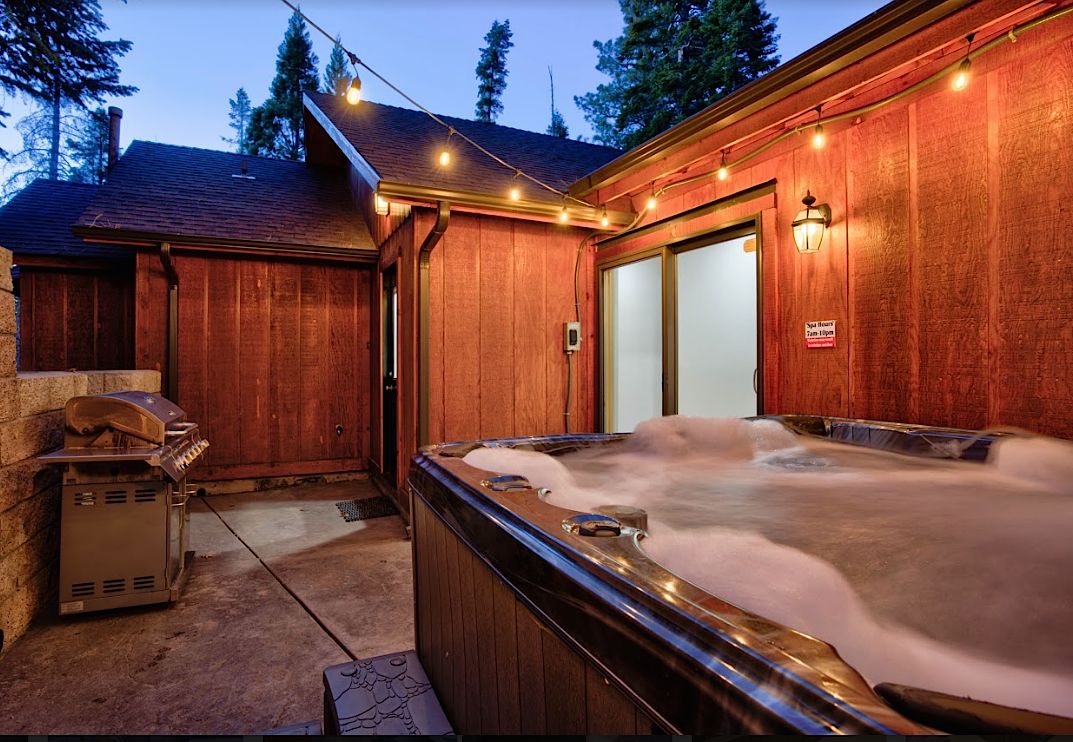
- Swimsuits. Yes, really — for the hot tub. Steaming in 100-degree water while snow falls around you is the single best Big Bear winter experience there is.
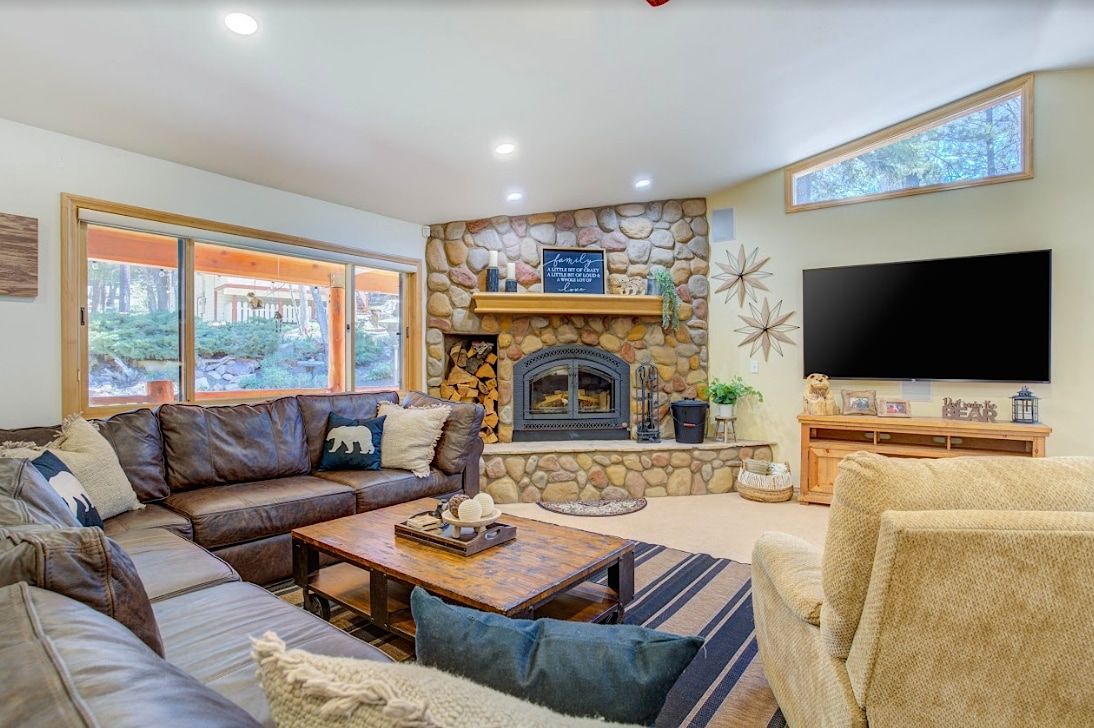
- Groceries and firewood. The cabin has a wood-burning fireplace (wood isn't provided, but it's easy to buy locally). Stock the kitchen on arrival and you may never need to drive again.
Where to Stay: Big Bear Reset
Location is everything on a mountain trip, and Big Bear Reset is positioned for all of it: 0.8 miles to Bear Mountain, 0.6 miles to the Zoo, in the quiet Moonridge neighborhood. The cabin sleeps 8 guests across 3 bedrooms — a king master suite with its own wood-burning stove, a queen room, and a bunk room that sleeps four.
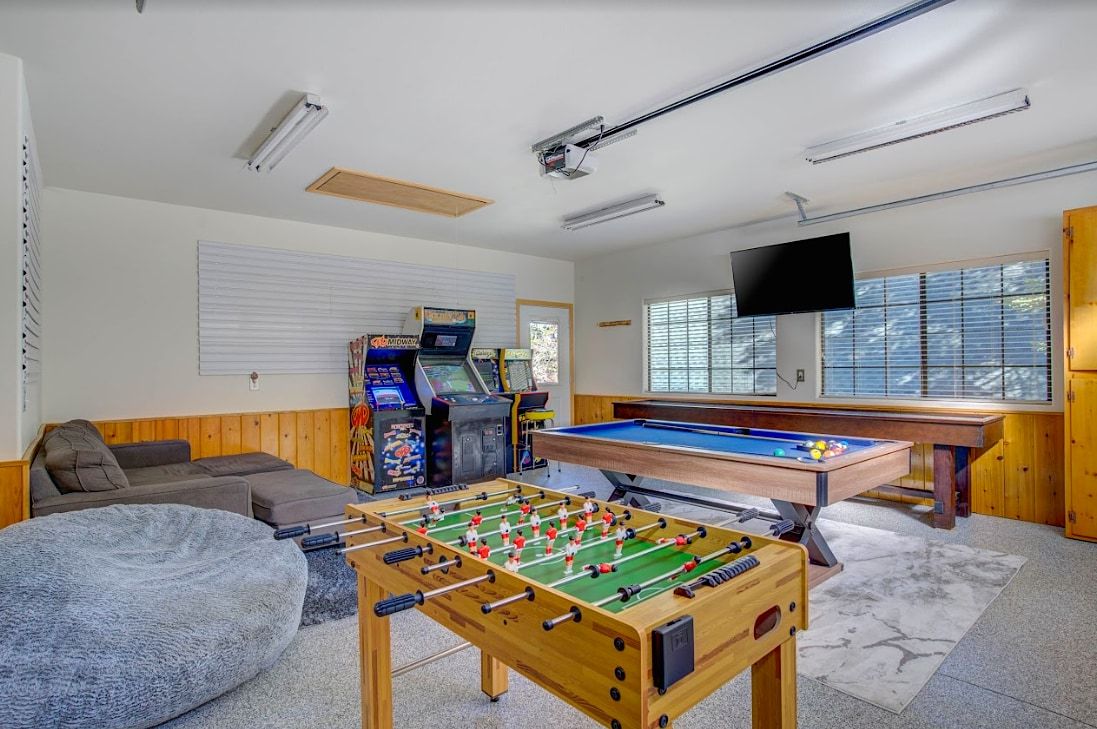
The cold-weather amenities are the point: a private hot tub for post-ski soaks, a wood-burning fireplace, a game room with pool table and arcade games, and a full kitchen for group cooking. Dogs are welcome, the wifi is fast, and with 4.7 stars across 140+ reviews, guests tend to come back.